
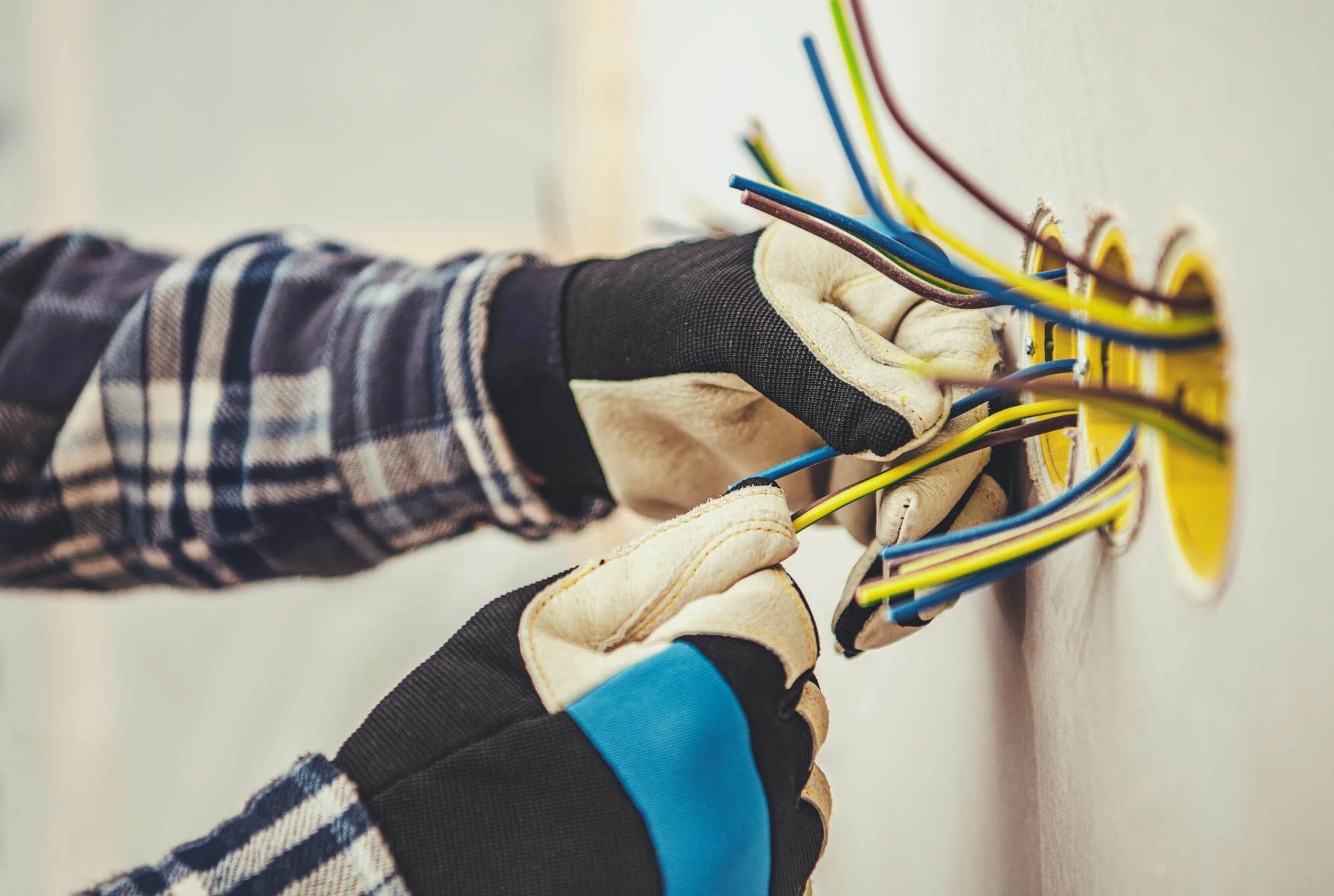
Open any wall in a New York apartment, and you will find a mix of metal jackets, plastic sheathing, and colored conductors packed between the studs. Most homeowners never see it until a renovation starts or a breaker keeps tripping. The type of cable behind your plaster decides how much power your home can carry, what a contractor can add, and how much a rewire will cost you.
The Four Basic Parts of a Branch Circuit Cable
Every branch circuit cable in your home holds the same basic parts, whether it runs to a bedroom outlet or a kitchen range.
- Conductor: The copper strand or solid core that carries current. Copper handles heat better than aluminum and stays standard for branch circuits in homes.
- Insulation: Thermoplastic coating around each conductor, rated for temperature and moisture. THHN and THWN ratings show up most often on individual conductors.
- Sheathing or armor: The outer layer holding the conductors together. This layer is where the wiring types split apart from each other.
- Grounding path: A bare copper wire, a green insulated wire, or a metal armor that carries fault current back to the panel.
Understanding these four parts explains why one cable costs three times more than another. The differences in electrical wiring in NYC homes come down to how much physical protection the sheathing gives and what the code allows in your building type. Choosing the right method calls for licensed electrical wiring services rather than a guess at the hardware store.
BX and MC Cable: The Metal-Jacketed Standard Behind NYC Walls
Walk through a Manhattan co-op renovation, and you will hear contractors talk about BX before anything else. The name comes from the Bronx, where the cable was manufactured, and the material has carried New York apartments for generations.
BX Armored Cable
BX, listed in the code as Type AC, wraps insulated conductors inside a spiral steel armor. A thin aluminum bonding strip runs inside the armor and works with the steel jacket as the grounding path. The armor resists nails, screws, and rodent damage, which matters inside old plaster walls and shared building cavities.
BX comes in the same conductor sizes as other branch cable, with 14 AWG and 12 AWG covering most lighting and outlet circuits. The armor makes the cable stiffer and heavier, so installation takes longer through tight framing and around corners.
MC Cable
MC, or metal-clad cable, looks similar from the outside and carries a separate green insulated ground wire inside the jacket rather than relying on the armor. This separate ground gives a cleaner path for fault current and simpler testing during inspection.
MC cable comes in standard and lightweight versions. Builders working on new apartment construction and gut renovations across Brooklyn and Queens lean on MC because it pulls faster and handles the same conditions. Both BX and MC need proper anti-short bushings at each cut end, since the sharp armor edge can slice through insulation and create a short inside the box.
Conduit Systems With THHN Conductors in Apartment Buildings
Conduit takes a different approach. Instead of a pre-assembled cable, electricians install empty pipe first and pull individual insulated conductors through afterward. The conduit becomes a permanent pathway, which allows new wires to be pulled later without opening walls.
Multi-story buildings, mixed-use properties, and many prewar apartment houses across Manhattan run on conduit. Homeowners in these buildings gain one advantage worth knowing about. Adding a circuit later becomes far less invasive when a spare conduit run already exists.
Types of Conduit Found in Homes
- EMT, electrical metallic tubing: Thin-wall steel pipe used indoors, bent on site and joined with compression or set screw fittings
- IMC and rigid metal conduit: Thicker pipe for exposed runs, service entrances, and locations needing mechanical strength
- Flexible metal conduit, called greenfield: Used for short connections to motors, dishwashers, and equipment that vibrates
- Liquidtight flexible conduit: Applied where moisture reaches the run, such as rooftop equipment and outdoor condensers
- PVC conduit: Used underground, in slabs, and in corrosive locations where metal would degrade
Conductors pulled through conduit carry THHN or THWN insulation, rated for heat and, in the THWN case, wet conditions. Fill limits apply, so a one-inch pipe holds a set number of conductors before the code requires a larger size. Overfilling traps heat and shortens insulation life, which is a frequent finding during residential electrical inspections and repairs in older buildings.
NM Cable and the Homes Where NYC Code Allows It
NM cable, known by the trade name Romex, holds two or more insulated conductors plus a bare ground inside a plastic jacket. Suburban homes across the country use it for almost everything because it costs less and installs faster than armored cable.
New York City treats it differently. The NYC Electrical Code permits Type NM in one and two-family dwellings and in multifamily dwellings, while prohibiting it in any multifamily building exceeding three floors above grade and in non-residential buildings. That single restriction explains why a Staten Island single-family house may hold plastic-jacketed cable while a six-story Brooklyn apartment building holds nothing but BX and conduit.
Homeowners run into trouble when they apply suburban habits inside a city building. A contractor pulling NM cable through a fifth-floor apartment creates a violation that surfaces during inspection, sale, or an insurance claim. Verifying what your building type allows comes before buying any material.
Service Entrance Cable and Feeders Carrying Power to Your Panel
Branch circuits get most of the attention, though the heavier wiring upstream matters more for capacity. Service entrance cable, marked SE or SER, runs from the meter to the main panel and carries the full load of the home. These conductors sit in the 4 AWG to 2/0 AWG range depending on service size.
Feeder cable carries power from the main panel to subpanels serving additions, finished basements, kitchen renovations, and rooftop equipment. A homeowner adding a subpanel for a home office or an HVAC system needs feeder sizing based on calculated load rather than a rough estimate.
Older brownstones and prewar apartments frequently carry 60-amp or 100-amp service installed decades ago. Modern demand looks nothing like the demand of that era. Induction ranges, ductless heat pumps, electric dryers, and EV charging all draw heavily at the same time. Matching new wiring to old service capacity creates nuisance tripping, and the fix starts with electrical panel upgrade services rather than another circuit squeezed into a full panel.
Low Voltage Cabling Modern Homes Now Depend On
Power cable answers only half the question. A modern apartment carries a second network of low-voltage cable that handles data, video, and controls.
- Cat5e and Cat6 ethernet cable for wired internet, streaming devices, and access points
- Coaxial cable for cable television and internet service drops
- Thermostat cable, usually 18 AWG multi-conductor, running between the wall unit and the HVAC equipment
- Speaker wire for in-ceiling and in-wall audio
- Doorbell and intercom wiring, which in apartment buildings ties into the building entry system
- Alarm and sensor cable for door contacts, motion detectors, and smoke device interconnection
- Low voltage lighting cable for LED strip systems, under-cabinet fixtures, and landscape lighting on terraces
Separation rules apply between line voltage and low voltage runs, since parallel runs cause interference in data cable and create shock risk during service work. Planning both systems together during a renovation saves opening the same wall twice.
Wire Gauge, Circuit Size, and Color Codes Inside Your Walls
Wire gauge follows the American Wire Gauge scale, where a smaller number means a thicker conductor. Common residential sizes work out like this:
- 14 AWG on 15 amp circuits for general lighting and bedroom outlets
- 12 AWG on 20 amp circuits for kitchens, bathrooms, laundry, and small appliance branches
- 10 AWG on 30 amp circuits for electric dryers and some air conditioning units
- 8 AWG on 40 amp circuits for ranges and larger equipment
- 6 AWG on 50 to 60 amp circuits for cooktops, subpanels, and EV chargers
Color coding follows a convention that helps anyone opening a box later. Black and red carry ungrounded current, white serves as the grounded neutral, and green or bare copper handles equipment grounding. In 240-volt circuits, you will find two hot conductors feeding the load, which is why a dryer receptacle looks different from a standard wall outlet.
Modern code requires GFCI protection in kitchens, bathrooms, laundry areas, basements, garages, and outdoor locations, along with AFCI protection across most dwelling unit circuits. Upgrading receptacles to meet these rules falls under outlet installation work rather than a simple swap, since protection type depends on the circuit behind the box.
Older Wiring Types Still Living Behind Prewar and Brownstone Walls
Many New York homes described as modern still hold sections of legacy wiring from earlier eras. These materials show up during renovations and home inspections.
Knob and tube wiring dates from the early 1900s and runs single conductors through porcelain tubes and knobs, with no grounding conductor at all. Insulation on these conductors dries and cracks, and any contact with modern insulation material traps heat.
Cloth-covered rubber cable followed knob and tube through the middle of the century. The rubber hardens and flakes off the copper over decades, leaving bare conductor inside boxes.
Aluminum branch circuit wiring appeared in homes built between roughly 1965 and 1973. Aluminum expands and contracts more than copper under load, which loosens terminations at outlets and switches and creates heat at the connection point.
Ungrounded two-prong circuits remain in service across many apartments. Plugging a three-prong adapter into these outlets gives no ground path and no protection.
Electrical distribution and lighting equipment ranks among the leading causes of home fires nationally. The United States Fire Administration reported an annual average of 28,300 residential building electrical fires causing 360 deaths, 1,000 injuries, and $995 million in losses. Aging conductors inside walls account for a share of those numbers, and the fires start in places nobody watches.
What Your Wiring Type Means for Renovations and Insurance
The cable in your walls affects decisions long before a fire risk appears. Three areas come up over and over.
Renovation scope changes with wiring type. Adding a circuit through existing conduit takes hours. Running new BX through finished plaster walls in a prewar apartment means opening and patching, which multiplies labor and finishing costs.
Insurance carriers ask about wiring during underwriting. Knob and tube and aluminum branch circuits draw questions, higher premiums, or coverage refusal from some carriers. Documentation from a licensed electrician showing remediation work changes those conversations.
Resale value moves with the electrical system. Buyers and their inspectors look at panel capacity, grounding, GFCI coverage, and visible cable type. A co-op board reviewing an alteration application asks the same questions before approving your renovation.
Permit Rules for Wiring Work in New York City
New York City holds some of the strictest electrical rules in the country, shaped by dense building stock where a fire spreads between units. All electrical work in the five boroughs must be performed under a Licensed Master Electrician or Special Electrician, and homeowners cannot pull their own permits under any circumstance.
Permits filed through DOB NOW cover new circuits, panel replacements, service changes, and most wiring alterations. Like-for-like replacement of a single device on an existing circuit falls outside the permit requirement, though the boundary is narrower than most homeowners assume. The city updates the NYC Electrical Code periodically to align with the National Electrical Code, and the 2025 edition took effect on December 21, 2025, with expanded GFCI and AFCI requirements for dwelling units.
Work completed without a permit creates problems that surface years later. Unpermitted wiring turns up during a sale, during a refinance, or during an insurance claim after damage. Clearing that record involves inspection, correction, and filing, which is where electrical code violation removal becomes the path back to a clean building record.
Book a Wiring Assessment Before a Hidden Problem Finds You First
Wiring gives no warning that you can see. The plaster looks the same on the day the cable was installed, and on the day the insulation finally fails. Warm switch plates, breakers that trip on the same circuit, outlets that spark when a plug goes in, and lights that dim when the microwave starts all point at the same thing, and each of those signs arrives long before the smoke does. Waiting turns a service call into a claim.
Energize NYC works across Manhattan, Brooklyn, Queens, The Bronx, Staten Island, and neighboring areas with licensed and insured electricians who handle rewiring, panel upgrades, circuit installation, outlet work, and c

