The 208V vs 240V gap surprises many NYC owners after a new oven or dryer arrives. The label says 240V, yet the apartment supplies 208V. It still works, just slower than promised. Our 208V and 240V appliance installation in NYC starts by measuring what your building actually delivers.
Why Do Many NYC Buildings Supply 208V vs 240V?
The short answer is three-phase power. Much of Manhattan and other dense areas run on the Con Edison network system, commonly served at 208Y/120V. Each apartment usually gets two of the three phases. Those phases sit 120 degrees apart, so the voltage between them is about 208V. A brownstone or house on split-phase service usually measures close to 240V. A meter reading at the panel settles the question in minutes.
Is a 240V Appliance Losing Heat on 208V Power?
Often, yes. A heating element has fixed resistance, so its power falls with the square of the voltage. At 208V, a 240V element makes about 75 percent of its rated watts. Rheem’s own bulletin shows a 5,500 watt element delivering about 4,131 watts on 208V. Expect these effects:
- Ovens and ranges preheat more slowly
- Electric dryers take longer per load
- Water heaters recover hot water more slowly
- Baseboard and wall heaters put out less heat
208V Rated Elements or a Buck-Boost Transformer
The cleanest fix is equipment rated for 208V. Many ranges and dryers list both voltages on the nameplate, and some ship with a 208V setting. If a unit is 240V only, a buck-boost transformer can raise the voltage. It needs correct sizing, its own overcurrent protection and a licensed install.
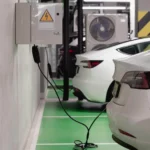
Is Your Level 2 EV Charger Slower on 208V?
A little. Charging power equals volts times amps. A 48 amp charger delivers about 11.5 kW at 240V and about 10 kW at 208V. That is roughly 13 percent less, because the charger still draws its full current. Ten kW over eight hours still adds about 80 kWh. Motors and compressors should carry a 208V rating on the nameplate too.
Planning bigger loads? Start with an NYC electrical service and panel upgrade review, or read our Con Edison load letter guide. Need a Manhattan apartment electrician? Call (646) 718-5996 or book a voltage check.
Still Unsure Which Voltage Your Apartment Really Has?
Do NYC apartments have 208V or 240V?
Many apartment buildings on the Con Edison network get 208V between two phases. Houses on split-phase service usually get about 240V. A meter reading at the panel confirms it.
Can I use a 240V appliance on 208V?
Many dual-rated appliances are built for it. A 240V-only heating appliance will run but put out about 25 percent less heat. Check the nameplate and manual first.
Is 208V bad for my appliances?
Lower voltage is not a shock hazard by itself. Heating appliances simply run weaker. Some motors not rated for 208V may run hotter, so follow the maker’s rating.
Energize NYC
155 Wooster St, New York, NY 10012
(646) 718-5996
www.energizenyc.com
Need an emergency electrician in NYC? Call (646) 718-5996, available 24/7.