
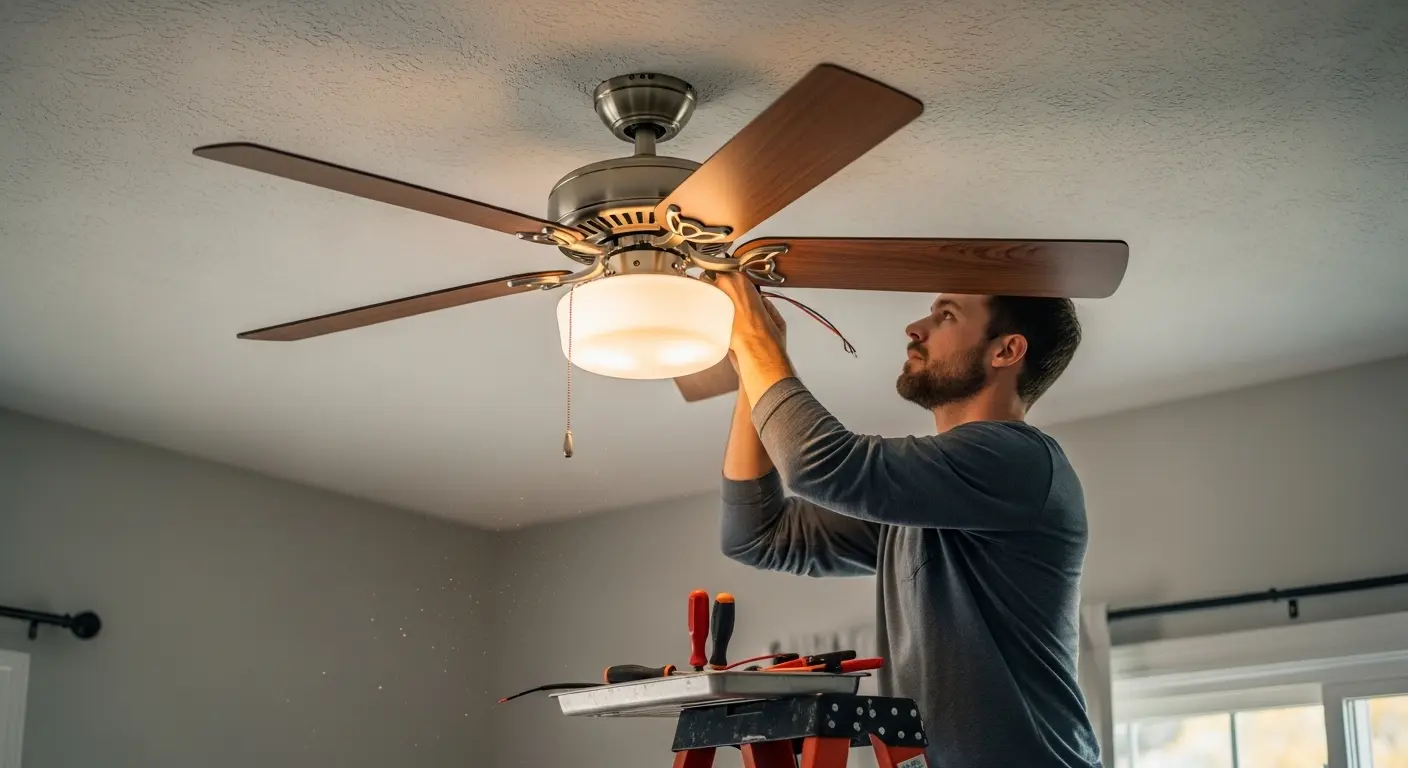
Ceiling fans are one of those home upgrades that actually make a difference in your electricity bill. The US Department of Energy estimates that using a ceiling fan allows you to raise your thermostat setting by about 4 degrees without any change in comfort, which cuts cooling costs noticeably over a New York summer. If you are considering ceiling fan installation in NYC on your own, this guide walks through the full process so you know exactly what is involved before you start.
What You Need Before You Start
Getting the right tools and parts together before opening anything up saves time and prevents mid-job trips to the hardware store.
Tools:
- Flathead and Phillips screwdrivers
- Wire stripper
- Voltage tester or non-contact voltage detector
- Ladder tall enough to reach the ceiling comfortably
- Electrical tape
- Wire nuts
Parts to confirm before buying the fan:
- Check whether your ceiling box is fan-rated. A standard light fixture box is not built to handle the weight and movement of a fan. If it is not fan-rated, you need to replace it before anything else.
- Measure your room size to choose the right blade span. Rooms under 75 square feet work with a 29 to 36 inch fan. Rooms from 75 to 144 square feet need 36 to 42 inches. Larger rooms need 50 inches or more.
Step 1: Turn Off the Power and Test It
Go to your circuit breaker and switch off the circuit for the room where you are working. After that, use a voltage tester at the ceiling box to confirm there is no live current before touching any wiring. Skipping this step causes serious injury. The tester costs about $15 and is worth having for any electrical work around the home.
Step 2: Remove the Old Fixture
If you are replacing a light fixture, unscrew the canopy cover and lower it carefully. You will see the wiring connections inside. Take a photo of how the wires are connected before you disconnect anything. This gives you a reference when connecting the new fan.
Disconnect the wire nuts, separate the wires, and remove the old fixture completely. Then check the ceiling box. If it is a standard light box rated for 35 pounds or less, it needs to come out and be replaced with a fan-rated box that handles 70 pounds and resists the torque of a spinning fan.
Step 3: Install the Mounting Bracket
The fan comes with a mounting bracket that attaches to the ceiling box. Follow the manufacturer’s instructions for your specific model since bracket designs vary. Most use a ball-and-socket or flush-mount system. Tighten all screws fully before moving on.
For homes with electrical panel upgrades or older wiring, this is a good point to check what you are working with. Aluminium wiring or knob-and-tube wiring in older NYC buildings needs specific handling and is not compatible with standard fan installation without professional assessment.
Step 4: Connect the Wiring
This is where most DIY ceiling fan jobs go wrong. The standard connection setup is:
- Black wire from the ceiling to the black wire from fan
- White wire from the ceiling to the white wire from fan
- Green or bare copper ground wire from the ceiling to the green wire from fan
If your ceiling has a blue wire, that connects to the fan’s light kit. If there is no separate switch for the light, cap the blue wire with a wire nut and leave it.
Twist each connection together, cover with a wire nut, and wrap electrical tape over the nut for extra security. Tug each connection gently to confirm it is tight before tucking the wires into the canopy.
When the Wiring Does Not Match
Older New York City apartments sometimes have two black wires instead of a black and white, or no ground wire at all. If the wiring in your ceiling does not match the standard setup, stop and call a licensed electrician. Guessing at wiring connections creates fire risk and will not pass inspection if your building requires it.
Step 5: Attach the Fan Body and Blades
With the wiring done and the canopy secured, attach the fan motor body to the mounting bracket following the manufacturer’s steps. Then attach each blade bracket to the motor and each blade to its bracket. Most fans include all the hardware needed, colour-coded or numbered for easier assembly.
Once all blades are attached, give the fan a slow manual spin to check that no blade catches or wobbles on the bracket.
Step 6: Restore Power and Test
Turn the circuit back on and test the fan on all speed settings. A slight wobble during the first run is normal as the blades settle. Most fans include balancing clips in the box that you can attach to individual blades to correct persistent wobble.
If the fan hums loudly, check that all blade screws are tight. If it trips the breaker when switched on, there is a wiring problem that needs a professional look before you run it again.
When DIY Ceiling Fan Installation Is Not the Right Call
NYC buildings, especially pre-war apartments and co-ops, have electrical systems that do not always follow standard residential wiring conventions. Shared neutral wires, aluminium wiring, and outdated panels all create complications that go beyond a standard fan swap.
If your ceiling box is not fan-rated and you cannot access the structure above to replace it, or if the wiring does not match any standard configuration, licensed electrical installation services are the safer path. The fan gets installed correctly, the wiring gets handled to code, and your building’s insurance stays valid.
Get Your Ceiling Fan Installed the Right Way in NYC
Energize NYC handles ceiling fan installation in NYC for apartments, homes, and commercial spaces across the city. If the wiring in your ceiling is not cooperating or you would rather have it done correctly the first time, contact us, and we will get it sorted without the guesswork.

